
|
|
Basic Strategy
|

|
 When in Rome
By Kit Woolsey (1999).
Backgammon is, in essence, a race. Your overall plan is to take the lead in the race. If you are behind in the race you must do something about it, such as containing one of your opponent's checkers or forcing him to leave you a shot which you hit. "When ahead in the race, race. When behind in the race, don't race."
|
|
|
 How Shall I Win This Game?
By Walter Trice (2006).
There are only three ways to win. Whenever you see a position in which one player has a substantial advantage, he has either a big lead in the race, a strong attack in progress, or a prime that pretty securely locks up one or more of his opponent’s checkers. The three ways to win are racing, attacking, and priming. Thus in a broad sense the game-planning problem is multiple choice.
|
|
|
 Basic Strategy for Beginners
By Mark Damish (1995).
Tips for beginning players from the Backgammon FAQ. Topics include: distribution, exposure, blocking and priming, hitting, and anchoring.
|
|
|
 Game Plan Selection
By Mary Hickey (2006).
Mary's articles are about "game plan selection". Problems where you have truly reached a fork in the road and must make a strategic, rather than tactical, decision which will probably determine the course of the rest of the game.
|
|
|
Backgammon Rules of Thumb
By Phil Simborg (2008).
Top players don't have a lot of really tough decisions to make during a typical game. That's because they are constantly applying Rules of Thumb that they have adopted over the years. These Rules of Thumb help them quickly rule out most of the bad plays and decisions and generally direct them to the right decision.
|
|
|
Backgammon Checker Play For Idiots
By Phil Simborg (2008).
Backgammon is an easy game to learn, but a hard game to play well. Over the years, I have learned several excellent guidelines to checker play. I teach all of these to my students, and I know they will be helpful to you as well.
|
|
|
 Basics of Backgammon
By Robert Townsend (2007).
Introduction to basic backgammon strategy -- the different game plans, bold play versus safe play, and how to think through a checker-play problem.
|
|
|
 Basic Backgammon Strategies
By Hank Youngerman (2002).
Your overall objective is always finding a way to get your checkers around the board and off before your opponent does. The strategy you choose is often dictated by the dice rolls early in the game and the strategy chosen by your opponent.
|
|
|
 Beginners Please
By Paul Money (2006).
This is the first in a course of lessons designed to take beginners up to the advanced levels of backgammon. Starting right from the beginning, we are going to learn all the techniques that underpin the games of the very best.
|
|
|
 General Principles of Play
By Oswald Jacoby and John R. Crawford (1970).
An introduction to basic strategy in backgammon: safety versus flexibility, early development, hitting, when to break contact, and how to bear off. (From The Backgammon Book, Chapter 5.)
|
|
|
 Battle Strategy: The Basic Approach to War
By Bruce Becker (1974).
There is only one way to be a great: you have to play and play and play some more, and then begin to formulate your own set of tactics. What I can give you, however, is a basic approach to overall strategy: ideas that will make you think, help you to experience, and lead you to win. (From Backgammon for Blood, Chapter 4.)
|
|
|
 The Tactics of the Game
By Barclay Cooke and Jon Bradshaw (1974).
The objective of backgammon is for one player to move his men around and off the board before his opponent can do the same. This is the game’s guiding principle. In order to do this most effectively, the good player learns to establish certain defensive and offensive positions. (From Backgammon, the Cruelest Game, Chapter 3.)
|
|
|
 Checker Play Posts
By Tom Keith.
Articles on the strategy and tactics of checker play from the Backgammon Galore Forum Archive.
|
|
|
Magriel’s Criteria for Safe Plays and Bold Plays
By Antonio Ortega (1993).
In Chapter 16 of his classic Backgammon, Paul Magriel outlines several features of positions which should incline you towards bold plays. Conversely, the absence of these features should incline you towards safe plays.
|
|
 |
|
Vision
|
|
|
 What's Your Game Plan?
By Kit Woolsey (2001).
Despite the luck of the dice, having a game plan is just as important in backgammon as in chess. It may not be such a precise plan, and you must be prepared to change your plan as dictated by the dice, but you should still have an idea of what you are trying to accomplish. Having a good game plan in mind facilitates the search for good moves.
|
|
|
 Avoiding Burger King
By Kit Woolsey (2003).
Five common types of flawed thinking which lead to big errors: Missing a candidate move; losing the forest through the trees; misevaluating priorities; making awkward plays; and failure to cube. If you can avoid these errors, you will be playing backgammon as well as humanly possible.
|
|
|
 Considering All Possibilities
By Bill Robertie (2007).
Some positions involve have many possible plays which are somewhat reasonable. These positions can be very tricky, and one of the dangers is overlooking the best play altogether while sorting through the wealth of possibilities.
|
|
|
 The Most Common Error
By Kit Woolsey (2001).
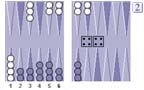
The most common cause of error is not even considering seeing the best play. Sometimes it is a complete oversight. Sometimes you are concentrating on the wrong theme and don't see the best move because it involves a different theme. Here are a few examples from top-level competition in important matches.
|
|
|
 Positioning the Cue Ball
By Kit Woolsey (1999).
Expert pool players plan ahead. They don't just think the current shot; they think two or three shots ahead. The backgammon player, like the pool shark, should look beyond the immediate roll and anticipate future problems. He should ask: "What course is the game likely to follow?"
|
|
|
Make it Pretty
By Phil Simborg (2007).
In addition to a mathematical approach to the game, there is also an aesthetic approach. It is possible to play excellent backgammon without calculating numbers and odds in your head constantly, simply by playing moves that look more appealing than others.
|
|
|
|
Psychology
|
|
|
 Backgammon for Life's Challenges
By Harvey Gillis (2011).
What do you do when you have a lot at stake and your choices are complicated or unclear? The simplest decisions of this kind do not include the uncertainty. But what if there is a major factor involved that is rather unpredictable, like traffic, weather, dice, emotions, or technology? A methodology exists for evaluating decisions of this kind; but it requires some ingenuity and discipline.
|
|
|
 The Art of War: The Tao of Backgammon
By Mark Driver (2001).
Although backgammon is generally placed within the family of board-games known as race games, it shares many similarities with members of the war games family, such as chess. This articles discusses some comparisons between war and backgammon.
|
|
|
 Winning Magick
By Mark Driver (2001).
Though backgammon is a game of skill and luck, we tend to focus on the skill side of the equation. When serious money and kudos are up for grabs, perhaps we should find time to consider this question: What would you rather be; the most skillful loser, or the luckiest winner?
|
|
|
Prepared, Alert and Motivated
By Paul Money (2006).
All your hard learned knowledge is of little use to you if you can't apply it. You must make the maximum use of what you have got.
|
|
|
 Flow: The Power of One
By Mark Driver (2001).
The long-term goal of the serious backgammon player is to improve. The immediate goal of the serious backgammon player is to play at their optimal performance, when it counts--here and now.
|
|
|
 Takgammon
By Takao Morioka (1987-1991).
This collection of short columns was published in Chicago Point between January 1987 and December 2001. The articles look at some of the more philosophical and psychological aspects of the game. They are geared towards "softening the brutality of backgammon" while at the same time promoting good sportsmanship.
|
|
|
See, I was right
By Fabrice Liardet (2011).
Outcome bias is the tendency to judge a past decision by its ultimate outcome instead of based on the quality of the decision given what was known at that time the decision was made. This can lead to learning the wrong lessons. How can players combat outcome bias?
|
|
|
The Psychology of Backgammon
By Barclay Cooke and Jon Bradshaw (1974).
There is no other game in which a player can so often make the wrong move and win as a direct result of it. That is why we have called backgammon the cruelest game. (From Backgammon, the Cruelest Game, Chapter 11.)
|
|
|
|
Openings
|
|
|
 How to Play the Opening Rolls
By Tom Keith (2006).
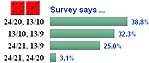
In-depth analysis of each of the 15 possible opening rolls. Each roll includes a survey of the most popular ways to play the roll, advantages and disadvantages of the possible plays, and a rollout showing how Gnu Backgammon ranks the plays. The article is sprinkled with quotes from other authors about how to approach the opening rolls.
|
|
|
Id=
By Nack Ballard.
|
|
|
 Rollouts of Opening Moves
By Tom Keith (2006).
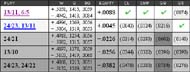
Rollouts of all the opening moves. Each play was rolled out 46,656 times using Gnu Backgammon at its strongest level.
|
|
|
 Backgammon Opening Replies
By Tom Keith (2005).
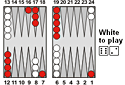
What basic principles should you follow when replying to your opponent's opening roll? Here are some points to keep in mind that will lead you in the right direction most of the time.
|
|
|
Rollouts of Opening Replies
By Tom Keith (2005).
Rollouts of all the possible positions you might face when your opponent wins the opening roll. A total of 693 positions (2218 candidate plays) are rolled out.
|
|
|
Bagai’s Replies: Mastering the Second Roll
By Jeremy Bagai (2015).
This paper presents a complete system for understanding and memorizing all the money-game opening replies. Understanding comes in the form of a set of rules based on the key features of each position.
|
|
|
Backgammon Opening Replies
By Timothy Chow (2009).
A summary chart of what current (as of October 2009) backgammon theory says are the best ways to play the second roll of a money game. The thirty rows are the thirty most commonly seen first moves, and the twenty-one columns are the twenty-one possible second rolls.
|
|
|
Backgammon Replies
By Nack Ballard (2009).
Chart of the best replies for each possible roll to each of the possible opening moves.
|
|
|
 Bgonline Opening Rollouts
By Stick Rice (2007).
Extensive rollouts performed with Snowie and Gnu Backgammon. Opening rolls: 2-1, 3-2, 4-1, 4-3, 5-1, 5-2, 5-3, 5-4, 6-2, 6-3, 6-4. Replies to opening roll: 2-1, 3-1, 3-2, 4-1, 4-2, 4-3, 5-1, 5-2, 5-3, 5-4, 6-1, 6-2, 6-3, 6-4, 6-5.
|
|
|
 What is 'Nactation'
By Tom Keith (2007).
In their book, Backgammon Openings, Nack Ballard and Paul Weaver use a special notation for labeling positions reached within the first few rolls of the game. This article explains how their notation (called "nactation") works.
|
|
|
Nactation
By Nack Ballard (2008).
The term "nactation" is an amalgamation of "Nack" (its inventor) and "action notation." Nactation uses terms for actions ("run," "split," "slot," ...) and directions (up, down) that are commonly used to convey checker movements. It takes only a minute or two to learn the basic symbols. Ultimately, you can nactate an entire game or match. However, the primary purpose of nactation is to communicate play sequences and positions that arise in the first few moves of the game.
|
|
|
 Early Doubles 1
By Nack Ballard (2007).
How to play doubles that a rolled early in the game. (First of two articles.)
|
|
|
Early Doubles 2
By Nack Ballard (2007).
How to play doubles that are rolled early in the game. (Second of two articles.)
|
|
|
Opening Goals
By Bill Robertie (2006).
Correct opening play is dominated by a few key goals. (1) Advance the back men. (2) Block your opponent's back men. (3) Hit your opponent's men. (4) Unstack. (5) Create problems for your opponent.
|
|
|
 Playing 2-1 on the Second Roll
By Bill Robertie (2007).
In this column we'll take a look at how Black should play a 2-1 when White has won the opening roll.
|
|
|
 Playing 2-2 on the Second Roll
By Bill Robertie (2007).
In this column we'll take a look at how Black should play a 2-1 when White has won the opening roll.
|
|
|
 How to Play the Opening Moves
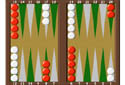
By Phil Simborg (2004).
Everything you need to know about making the right play first roll of the game.
|
|
|
 Taking a Big Step Forward
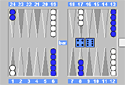
By Alex Zamanian (2000).
Making the two point with an opening 6-4 was considered by experts to be an inferior way to play the roll. Modern rollouts have shown otherwise. If you choose chosen make this play, you should try to steer away from a priming game and towards a blitzing, holding, or running game.
|
|
|
Posts on Opening Rolls
By Tom Keith.
Postings on how to play the opening rolls and opening replies. From the Backgammon Galore Forum Archive.
|
|
|
In the Beginning: The Opening Moves Revisited
By Bill Robertie (1983).
I've selected an informal "panel" of 16 of today's top players and surveyed their choices for opening rolls and replies in matches played in the last 4 years. Here are the results along with comments.
|
|
|
|
Early Game
|
|
|
 In the Beginning
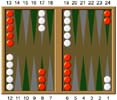
By Nack Ballard and Paul Weaver (2003).
A three-part series on the first rolls of a game of backgammon. This series is suitable for backgammon players of all strengths. Part 1 aims mostly at teaching beginning and intermediate players. Parts 2 and 3 build on earlier knowledge and gradually present a greater challenge.
|
|
|
 Creating Problems
By Kit Woolsey (2000).
To get the best possible result, it may not be sufficient to just make the theoretically correct play. It might be better to make slightly inferior plays if these plays have a chance to induce your opponent to make even greater errors.
|
|
|
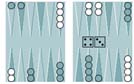 The Other Side of the Board
By Kit Woolsey (2000).
Positions where what is happening on one side of the board affects the play on the other side of the board. It is necessary to get the big picture to understand the position and find the right play.
|
|
|
 A Look at the Golden Point
By Michael Crane (2000).
You can gain a large measure of security throughout a game by making a single point. This is your opponent's 5-point, called the Golden Point. It is the most important point for you to establish in the game.
|
|
|
When Splitting is a Bad Idea
By Bill Robertie (2006).
So when is slotting to be preferred to splitting? Look for a combination of factors, some of which argue against splitting, others of which argue in favor of slotting. Consider slotting when you are in a weak position, with stacks and stripped points, and facing a strong opposing board.
|
|
|
 Two Opening Problems
By Bill Robertie (2006).
Although the first roll of the game is pretty well understood, backgammon gets much more complicated as we get deeper into the game. The two positions in this article occur at the third move, after Black wins the opening roll and White responds.
|
|
|
 Build or Hit?
By Bill Robertie (2007).
In the opening, plays that hit blots or make key points tend to dominate all other maneuvering plays. Interesting choices, however, arise when both choices are available. Do you hit, or do you make a point?
|
|
|
|
Attacking Games
|
|
|
Attack or Prime?
By Mary Hickey (2006).
When your opponent has only one checker back, the best way to contain him is by attacking. The priming approach can be effective as a prelude to an eventual attack, but not when he's at the edge threatening to escape. A blocking structure is most effective against two or more checkers.
|
|
|
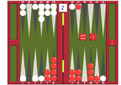 When it Pays to be Greedy
By Mary Hickey (2006).
Priming two or more checkers is a good rule to follow when your only goal is to win the game. But sometimes attacking is right if you are going for the gammon. How do you know if the risk is worth taking? The general rule is that you need to win twice as many added gammons as you lose added games.
|
|
|
Kill or Let Die?
By Mary Hickey (2007).
In sharp-edged positions, choosing the right time to hit can be crucial. Sometimes it is best to "load your gun" (i.e., improve your board) before you "fire your gun" (i.e., hit your opponent).
|
|
|
The Late Game Blitz
By Bill Robertie (2006).
In a late game blitz, one side has a blitz in progress and the other side has some sort of structure in place, which might range from a few scattered points to an imposing five-prime. The blitzer still has some checkers to extricate before he can claim the game. These positions are common, often difficult, and always important.
|
|
|
The Backgammon Blitz
By Phil Simborg (2008).
The idea of the blitz is to barrage your opponent by hitting him and making points and hopefully, if you are successful, closing him out completely so that he has one or more checkers on the bar while you proceed to win a gammon or backgammon.
|
|
|
Stationary Approach
By Jeff Ward (1982).
Black can put the finishing touch on his blitz by covering the blot on the three point. If Black succeeds, he paralyzes White; and since White lacks an effective blocking structure, there is little to prevent Black from bringing the rest of his men safely home. What is the best way to finish off this blitz?
|
|
|
The Blitz
By Antonio Ortega (1993).
In a blitz, you attack enemy blots seeking to close all six points in your home board while your opponent has one or more checkers on the bar. A blitz is a double-edged sword. If your blitz succeeds, you usually win a gammon, but if it fails you remain with isolated armies.
|
|
|
|
Priming Games
|
|
|
Primes vs Blots
By Walter Trice (2006).
Positions in which both sides are trying to contain a single blot with a prime, constitute the simplest prime-vs.-prime pattern. They deserve study because they illuminate the general problem of prime-vs.-prime strategy.
|
|
|
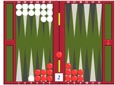 Prime Development
By Walter Trice (2006).
Always look for a play that gives you as many points out six consecutive points as possible, even if it doesn't seem like the position before you demands a priming game plan. The best-of-six play, if it exists, will not always be the best play, but it very often will be, and if you don't go looking for it you may not spot it.
|
|
|
 Desperate Measures
By Walter Trice (2006).
What's the best way to win when you are trapped behind your opponent's prime? Fortune favors those who expect it, plan for it, and welcome it when it arrives.
|
|
|
Prime Time?
By Mary Hickey (2006).
It is usually best to build on your strengths. If you are ahead in the race to block your opponent, then it is often best to continue with this theme.
|
|
|
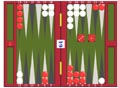 Playing Against a Five-Point Block
By Mary Hickey (2007).
The best way to defend against opponent's strong blockade is often not obvious. Should you run to the edge of the block? Should you counterblock his back checker? Or should you just hunker down an make whatever point you can?
|
|
|
 Planning to Play to Win
By Mary Hickey (2006).
A "frogboiler" refers to the belief which many hold, that if you drop a frog in boiling water he will leap out, but if you put him in cool water and gradually turn up the heat, he won't perceive the danger and will boil to death. I haven't tried this at home, and I hope you won't either, but I find the concept useful anyway.
|
|
|
Exception to Attacking a Single Back Checker
By Mary Hickey (2006).
Here is an exception to the maxim, "Attack a single back checker." In the illustrated position, an attack is a blitzing play with too little ammunition to complete the blitz.
|
|
|
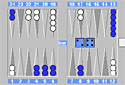 Priming vs. Splitting in the Opening
By Alex Zamanian (2001).
When deciding between a splitting or a priming-oriented play, take a look at who is currently winning the priming game. Being behind in the race, owning better priming points, or having a better priming structure usually makes priming your best option.
|
|
|
Building Structure
By Bill Robertie (2007).
One of the most difficult choices in the early and middle game is between creating structure (a blocking prime) and attending to issues on the other side of the board. Those issues vary: you might be able to hit a checker, make a defensive anchor, or escape one of your back men.
|
|
|
 Handling 6-Primes
By Bill Robertie (2007).
No matter how well you roll, you can't escape from behind a six-prime. However six-primes do have one weakness: it takes 12 checkers to make a six-prime, leaving only three checkers for maneuvering. If you can build some sort of block of your own, you can create cracking numbers for your opponent.
|
|
|
Wanna Bet?
By Gaby Horowitz and Bruce Roman (1983).
This position was published in Gammon's of Chicago August 1982 newsletter. Bill Davis, the editor, spent a considerable amount of time and effort gathering the opinions of many of the notables who attended the Las Vegas Tournament and the Chicago Open. Here are the results.
|
|
|
The Prime Syndrome
By Gaby Horowitz and Bruce Roman (1983).
Students of the game of backgammon have long been taught and even conditioned to build and maintain primes. Backgammon is a game of escape and entrapment. Primes are very effective vehicles for entrapping your opponent. But, as most of us have learned at some point in our lives, too much of a good thing can be harmful. So it is with primes.
|
|
|
The Priming Game
By Antonio Ortega (1993).
In a priming game, you make several consecutive points to block your opponent's rear checkers from escaping. You often build a priming game around your four through eight points. A priming game is most effective when your opponent has two or more trapped checkers.
|
|
|
|
Holding Games
|
|
|
Breaking Up Is Hard to Do
By Kit Woolsey (1999).
When I first went through games played by TD-Gammon (the first neural network backgammon playing program), I looked for unusual plays which were different from what I would have done. One recurring theme I noticed was that TD-Gammon would often break up its board in a holding game for no apparent reason.
|
|
|
 Breaking the Anchor
By Kit Woolsey (2002).
The decision of when to break anchor is one of the most important in backgammon. Breaking an anchor is a very committal play. The anchor is gone for good and loss of the anchor exposes you to attack. On the other hand, the anchor must be broken at some time if the game is to be won. Break it too late, and you may be stuck there and forced to crunch your board.
|
|
|
What to Do When Nothing Is Happening
By Walter Trice (2006).
When you are behind and hoping for a lucky break, it can be difficult to muster up the energy needed to maximize your chances. Often the problems involve subtle details of checker distribution and flexibility. But these details, in the extreme cases, can make for very large differences in equity.
|
|
|
End Game Planning
By Walter Trice (2006).
Long-range planning doesn't stop in the endgame. A player holding an anchor in a defensive position, with limited choices from roll to roll, still needs to be acutely aware of the different game plans that may become available to him.
|
|
|
Contact and the Race
By Walter Trice (2006).
One of the most frequently cited principles of backgammon strategy is to try to play a racing game if you are ahead in the race. But when deciding whether to break anchor, you must also be concerned with timing.
|
|
|
 More Contact Problems
By Walter Trice (2006).
The single most common strategic decision in backgammon is whether to intensify the conflict between the opposing armies of checkers, or to try to reduce contact and emphasize the racing aspects of the game plan.
|
|
|
On Sniping
By Walter Trice (2006).
Breaking anchor is often the last strategic decision made by either player in a game. Do you break contact completely, leaving the outcome to the pip count and the dice, or to leave a blot in enemy territory, hoping to hit a shot that will decide the game?
|
|
|
A Time for Letting Go
By Mary Hickey (2006).
When deciding whether to break anchor, you have to be aware of the timing and anticipate whose position is likely to break first. It can be helpful to count crossovers till you have to choose between breaking your anchor and crashing your home board.
|
|
|
Playing High Anchor Games
By Paul Money (2006).
There are many situations where the checker play of the anchor holder is difficult. We are trying to learn what features of the position are important so that we can organize our thinking when we face a similar position over the board.
|
|
|
Handling the High Anchor Games
By Bill Robertie (2006).
The most common type of contact position is called the "anchor game". Anchor games occur when one side escapes his back checkers to the safety of the midpoint or beyond, but the other side does not. Instead, the defender manages to anchor his two back checkers somewhere in his opponent's home board.
|
|
|
The Holding Game
By Antonio Ortega (1993).
In a holding game, you maintain an anchor -- a point in your opponent's home board, or occasionally, his bar point -- to hinder your opponent's bear-in and possibly hit a blot he leaves in clearing his outfield points.
|
|
|
|
Back Games
|
|
|
Are You Sure it is a Back Game?
By Mary Hickey (2006).
When you have two deep points in your opponent's board, don't label it "back game" in your mind too soon. At the early stages, just having two points in the opponent's board isn't enough.
|
|
|
Another Great Back Game to Avoid
By Mary Hickey (2006).
Having four checkers back on two points doesn't necessarily make a good back game. It would follow, then, that if you are likely to have a hard time even getting your two points, having a fourth checker sent back might be a pretty bad idea.
|
|
|
 Lifeline of a Back Game
By Kit Woolsey (1999).
Having a lifeline is often the difference between success or failure of the back game. The trick is to hold your midpoint when playing a back game and force your opponent to break his midpoint when he is playing a back game.
|
|
|
Proto-Back Games
By Bill Robertie (2006).
Proto-back games are games where the defender has several men back, perhaps behind a prime, perhaps not, and can still go in several different directions, one of which is a full-fledged back game. They are full of weird and counterintuitive plays, making them some of the most fascinating positions to study.
|
|
|
 Checker Play in Back Games
By Bill Robertie (2007).
Back games are among the most interesting, and the most difficult, of backgammon game types. Here, back games into five types: Proto-back game, back game with a prime, back game without a prime, containment game, and post-ace-point game.
|
|
|
 More about Back Games
By Bill Robertie (2007).
What do you do when the shape of the game has not yet been completely determined and both sides have to keep their options alive? In general, you want to go forward. Plays that contain a significant chance of going forward tend to dominate more defensive plays.
|
|
|
Switching Gears
By Bill Robertie (2007).
Sometimes a game appears to be following a certain course for awhile, then a tactical possibility arises which allows one of the players to wrench the game out of its obvious direction and send it another, and more favorable, way.
|
|
|
Two Interesting Back Game Plays
By Bill Robertie (2007).
Back games are among the most interesting categories of backgammon positions. Obvious plays are often wrong and counterintuitive ideas abound. Some real insight and experience is often needed to find your way to the right play.
|
|
|
Backbreakers
By Fran Goldfarb (1982).
We all love backgames. It's great to hang onto those points in your opponent's homeboard, waiting for that shot, playing for the win. If you lose too many points too often, take a look at some backgames. Winning every game should not be your goal. It's often correct to play to save a gammon. I know it may not sound like fun to a gambler, but it's a necessary part of a good player's game.
|
|
|
The Back Game
By Barclay Cooke and Jon Bradshaw (1974).
The back game is a rear-guard action thrown up to resist the inevitable flood. It can be a colorful and exciting tactical play; it can be brilliantly executed and even rewarding, but in the main, the back game has too many sudden pitfalls, too many built-in snares, to be viable more than half of the time. (From Backgammon, the Cruelest Game, Chapter 6.)
|
|
|
Back Games
By Tom Keith.
Articles on playing back games. From the Backgammon Galore Forum Archive.
|
|
|
The Back Game
By Antonio Ortega (1993).
In a backgame, you keep two or more anchors in your opponent’s home board, hoping to wait until he has weakened his position, and then hit a blot near the end.
|
|
|
Last updated: 26 Aug 2026
|