
|
|
Backgammon Clubs
|

|
 Forming and Operating a Backgammon Club
By Bill Davis (1996).
These tips are from Bill Davis of the Chicago Point newsletter and Chicago Bar Point Club. They are primarily based on experience of United States clubs, but most of the advice should apply anywhere.
|
|
|
 Tips on Visiting Backgammon Clubs
By Albert Steg (1995).
Some pointers on playing in a strange town, ranging from points of etiquette to practical money matters.
|
|
|
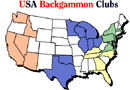 USA Backgammon Clubs
By Bill Davis.
A well maintained list of backgammon clubs in the United States with contact information and meeting times.
|
|
|
 Starting a Backgammon Club
By Michael Crane (2000).
It's not easy starting a new backgammon club. You need patience, at least two backgammon players, and a lot of help. Here's everything you need to know to get your club up and running successfully.
|
|
 |
|
Luck vs Skill
|
|
|
The Trial (and Tribulations) of Oregon Promoter Ted Barr
By Backgammon Times (1982).
A detailed account of the 1982 trial, the State of Oregon v. Ted Barr, in which backgammon promoter Ted Barr successfully defends his right to hold a backgammon tournament. "Judge Walker concluded that backgammon is a game of skill, not a game of chance."
|
|
|
 A Backgammon Gamble Pays Off
By Games Magazine (1982).
An article originally published in the September 1982 issue of Games Magazine. Is backgammon a game of skill or chance? A U.S. court answered that question in a decision that may affect backgammon players and promoters throughout the country.
|
|
|
 Luck vs. Skill in Backgammon
By Phil Simborg (2006).
Backgammon is a game of skill, and the more skill you have, the more likely you are to win. But backgammon is also a game of luck. In the short run, just about anyone can beat anyone.
|
|
|
 A Measure of Luck
By Douglas Zare (2000).
Can we measure luck in backgammon? What criteria should a measure of luck satisfy? Zare defines how to measure luck in backgammon and gives some interesting properties of luck.
|
|
|
 Quantifying Backgammon Skill
By Chuck Bower (2001).
This article looks at various ways of assessing your skill in backgammon. Possible measures are: head-to-heading money play, tournament performance, online ratings, and software analysis.
|
|
|
 Hedging Toward Skill
By Douglas Zare (2000).
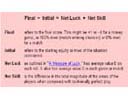
Zare shows how to use variance reduction to remove most of the luck from the game. This provides a way for a backgammon player (or program) to analyze games between stronger players. Zare also introduces "hedged backgammon," where you makes side-bets canceling most of the luck of the game.
|
|
|
 Backgammon, Gambling on Luck or Gambling on Skill
By Hank Youngerman (2001).
This article compares the luck and skill in backgammon to pure skill games, other board and card games of skill and luck, and to casino gambling games which are normally played for money.
|
|
|
 About Luck and Skill in Backgammon and Poker
By Frank Frigo (2006).
Answers to two common questions: (1) How much of backgammon is luck? (2) What takes more skill, backgammon or poker?
|
|
|
 Luck vs. Skill Postings
By Tom Keith.
Articles about the role of luck and skill in backgammon. From the Backgammon Galore Forum Archive.
|
|
|
The Great Atlantic City Backgammon Trial
By Les B. Levi (1983).
The continuing battle between backgammon and America's legal system was waged this time in Atlantic City, New Jersey. The purpose of the Superior Court trial was to determine the legality of backgammon tournaments in the state.
|
|
|
The Legal Status of Backgammon in America
By Danny Ly (1982).
The legal status of backgammon is still in doubt because of varying interpretations of antigambling laws. As backgammon continues to grow in popularity, its legal status must be clarified.
|
|
|
Luck in Chess
By Bill Robertie (2013).
This is an excerpt of an interview Richard Munchkin did with Bill Robertie. Robertie describes how luck plays a part even in chess, a game often described as a "pure-skill" game.
|
|
|
Comparing Games of Skill and Chance
By Bill Robertie (2014).
Although the ratio of luck and skill in backgammon can’t be resolved, there is an approach that lets us compare backgammon to other games of skill and chance or even pure skill. Let’s look at how this might work.
|
|
|
|
Etiquette
|
|
|
 Sportsmanlike Conduct
By Phil Simborg (1995).
Here are things that I would like to suggest should be the do's and don'ts of backgammon play. Most of these apply to both live matches and electronic (internet) play. Chouette play has an even more complex set of standards.
|
|
|
 Why I Never Complain About the Dice
By Phil Simborg (1999).
I never complain about a roll, or bad luck. Ever. And I am sure my opponents appreciate it, and I am sure I play better and am happier as a result.
|
|
|
Proper Etiquette for Backgammon Spectators
By Phil Simborg (2008).
Some rules for spectators to follow when watching matches at a backgammon tournament.
|
|
|
Backgammon Etiquette
By Oswald Jacoby (1980).
Good etiquette makes for good backgammon and good fun. Poor etiquette leads to arguments, bad backgammon, and no fun at all. Here are 20 rules making backgammon more fun.
|
|
|
 Etiquette
By Oswald Jacoby and John R. Crawford (1970).
Some guidelines for proper procedure when playing backgammon. The result is a game that is more enjoyable for all. (From The Backgammon Book, Chapter 18.)
|
|
|
Backgammon Etiquette
By Tom Keith.
Articles on good conduct in backgammon to make playing fun for everyone. From the Backgammon Galore Forum Archive.
|
|
|
Cheating in Backgammon
By Tom Keith.
Ways people might cheat in backgammon. How to avoid being cheated. From the Backgammon Galore Forum Archive.
|
|
|
|
Chouettes
|
|
|
 How to Run a Chouette
By Tom Keith (2004).
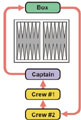
Chouettes offer many advantages over one-on-one play in a club situation. They are fun, sociable, and exciting. And it is easy for players to join a game or take a brief break when they want to. Here are the basic rules and common variations for running a chouette.
|
|
|
 ABA Chouette Rules
By Gregg Cattanach (2003).
A great set of rules for chouettes used by the Atlanta Backgammon Association. Covers: Basics and terms, Stakes, Consultation, Scoring and settlements, Doubling, Rotation, Proxies, Legal Plays, Pip count, Scorekeeping, and Modifications to the rules.
|
|
|
St Albans Chouette Rules
By Anonymous (2014).
Chouette rules used by the St Albans Backgammon Club.
|
|
|
 Settlements for Chouette and Money Players
By Phil Simborg (2006).
With the help of my good buddies, Jake Jacobs and Danny Kleinman, I have created a Settlement Chart to be used as a reference point for the more common situations where settlements occur.
|
|
|
 Online Chouettes
By Hank Youngerman (1999).
An introduction to online chouettes and how they can work. Most backgammon play sites have no special software to play chouettes. So you need someone to run the chouette who will keep score and keep track of the position of all cubes.
|
|
|
Chouette Backgammon: How to Win
By Phil Simborg (2008).
The most exciting gambling game I have ever played is Chouette Backgammon. That's 3 or more players at a time playing for money, one against the rest. This type of play forces you to, not only use your backgammon skills, but your poker and bluffing skills as well. Here are the most important strategies for winning.
|
|
|
Individual Cubes Variation
By Mary (1980).
How many times have you found yourself on a team with a captain who has a large minus on the score, and doubles on the second roll of the game, before you have a chance to say "Boo"? If you have ever been the victim of this situation, consider trying this new type of chouette, where individual cubes are used.
|
|
|
Chouette
By Oswald Jacoby and John R. Crawford (1970).
Introduction to chouettes. "A chouette is backgammon for more than two people, and is thus a more social form of the game. There can be three, four, five, or even more players." (From The Backgammon Book, Chapter 12.)
|
|
|
 Chouette
By Barclay Cooke and Jon Bradshaw (1974).
Chouette -- that is, one person playing against a field of two or more players -- in its broadest sense is the most civilized and social form of the game, inspiring both competitiveness and camaraderie. (From Backgammon, the Cruelest Game, Chapter 8.)
|
|
|
Chouette Posts
By Tom Keith.
Several articles on rules and strategy in chouettes. From the Backgammon Galore Forum Archive.
|
|
|
How to Play Backgammon Chouettes
By Bill Robertie (2015).
The word “chouette” derives from a French card game called ecarte, played around the turn of the last century. Ecarte was a two-person game in which the players bet against each other. On occasion, however, a player could make a side bet against a spectator. This situation was known as playing “la chouette”. (Article continues with Part 2..)
|
|
|
Backgammon ACT Chouette Rules
By Greg Ash (2002).
The local rules used by Backgammon ACT for playing chouette in the Club. Please note that these are not always strictly adhered to!
|
|
|
|
Ratings
|
|
|
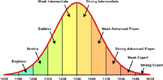 Introduction to Ratings
By Tom Keith (2006).
An explanation of how ratings work in backgammon. What factors affect your rating. All about the rating formula. How to figure your chances of winning a match against another player.
|
|
|
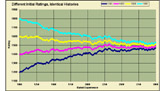 Ratings: A Mathematical Study
By Douglas Zare and Adam Stocks (2001).
Zare and Stocks investigate some of the properties of the ratings system used on FIBS and other backgammon servers. What is the half-life of a ratings change? How much can you expect your rating to vary over time?
|
|
|
 The FIBS Rating System
By Kevin Bastian (1998).
How do ratings on FIBS work? This article explains the rating formula and shows how the length of the match, each player's experience, and the difference in the players' ratings affect your rating when you win or lose a match. A similar ratings system is used on many other backgammon play sites.
|
|
|
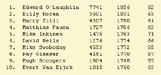 Rankings and Ratings
By Chuck Bower (1999).
"Who's the best backgammon player in the world? How does my game compare with the best players, other players on my internet server, players in my local club?" Answering these inquiries for backgammon is even more difficult than for other intellectual games like chess and contract bridge.
|
|
|
Ratings Posts
By Tom Keith.
Several good articles about the ratings system used in backgammon. From the Backgammon Galore Forum Archive.
|
|
|
Backgammon Ratings: What They Are, How They Work, and Are They Useful
By Kent Goulding (1984).
How ratings work in backgammon and an introduction to Kent Goulding's International Ratings List, which ran from the early 80's to the mid 90's.
|
|
|
|
Tournaments
|
|
|
 Mark Your Calendar Alive
By Carol Joy Cole.
Calendar of tournaments held in the United States and around the world. Includes face-to-face tournaments as well as some online tournaments.
|
|
|
 Chicago Bar Point Club Tournament Procedure
By Bill Davis (1996).
Procedures for running a club tournament. A sample score sheet shows how the draw works, with a side pool, and how the prizes are awarded.
|
|
|
Live Backgammon Tournaments
By Phil Simborg (2006).
If you have ever played at a live tournament, you know that there is nothing else like it. I've played in many, and my adrenaline goes up every time. Here are some tips for newcomers.
|
|
|
31 Things You Need to Know for your First ABT Tournament
By Stick Rice (2008).
Advice from various players about attending your first ABT event.
|
|
|
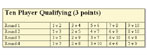 Running a Club Evening Tournament
By Rodney Lighton (2003).
The tournament format used by the Liverpool Backgammon Club. The goal is to: produce a winner and runner-up for prize/trophy purposes, provide a reasonable guaranteed amount of backgammon for everyone, and fit into the time available.
|
|
|
 Panic City
By Stephen Clark (2000).
How to handle the pressure of a major tournament match.
|
|
|
 The Simborg Doubles Conflict Resolution Solution
By Phil Simborg (2007).
In doubles backgammon, there are two players on a team and they consult on every play and cube decision. What if the teammates can't agree on the play to make? Here is Phil Simborg's solution.
|
|
|
How to Make Tournaments more Fun
By Phil Simborg (2007).
I love competing at backgammon tournaments, but I've gotten bored with them after several years of competing. They could be a lot more fun and interesting with a few changes. Here are some suggestions.
|
|
|
Summary of Basic Rules of Tournament Play
By Phil Simborg (2009).
Important rules and suggestions to avoid problems and help your games go more smoothly when you play tournament backgammon.
|
|
|
How to Run a Backgammon Tournament
By Oswald Jacoby and John R. Crawford (1970).
Backgammon, like most games and sports, is easily adapted to tournament play. As a matter of fact, backgammon is so versatile a game that it is adaptable to a number of different kinds of tournaments. (From The Backgammon Book, Chapter 14.)
|
|
|
Clocks in Backgammon
By Kit Woolsey (2008).
An overview of how chess clocks are used in backgammon tournaments.
|
|
|
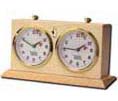 The Chess Clock
By Kit Woolsey (1996).
An article Kit wrote for Inside Backgammon after the World Cup in 1996 that represents his personal views about clocks in backgammon. "The clock is here to stay. Without it, slow play becomes a major problem at backgammon tournaments."
|
|
|
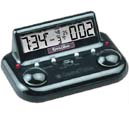 Clocks in Backgammon
By Kit Woolsey (2000).
Backgammon is not like chess, where the actual time required for moves is fairly constant and the clock regulates thinking time. Getting used to the clocks just takes a bit of practice. Even the players generally regarded a being slow prefer to have clocks so they can demonstrate that their speed is being unfairly criticized.
|
|
|
A study of digital clock usage in 7-point matches
By Chuck Bower (2008).
The results of a study of 179 seven point backgammon matches shows that 90 minutes is sufficient time to complete 98% of matches with Bronstein clock settings of 12 sec per move plus 15 minutes of reserve time for each player. A simulation making use of the experimental results predicts that a full 16-player elimination tournament will last between 4 and 6 hours.
|
|
|
Compensating Players Who Do Not Receive a Bye
By Bob Koca (2011).
There can be substantial equity in drawing a bye in drawing a bye in a tournament. To even out the luck of the draw, players who do not receive byes could be compensated. Here is a method to do that.
|
|
|
My Experience at Monte Carlo
By Chuck Bower (2010).
Not only is the annual Monte Carlo World Championship the most famous and prestigious active backgammon tournament in the world, it is also the most discussed and debated. As such, even though I took my first ever step in France on this trip, I felt like the event was already familiar. My personal 9 day experience is reviewed here.
|
|
|
Tournament Posts
By Tom Keith.
Articles on different types of tournaments and rulings that come up in tournaments. From the Backgammon Galore Forum Archive.
|
|
|
Highways and Byways of Byes
By Danny Kleinman (1981).
Backgammon players who enter tournaments often complain about byes. The effect of a bye is to double the recipient's chances and equity. There is a method of dealing with this inequity: The director rebates to the players who don't get byes half their entry fee.
|
|
|
Michigan Movement
By Bob Ciaffone (1980).
A popular format is double elimination, where a player must lose two matches before being knocked out. However, this has a serious drawback for club play; it lengthens the tournament by several rounds. The Michigan Movement captures the benefits of double elimination without using extra rounds.
|
|
|
Double Elimination
By Henry Wattson (1981).
The double elimination tournament has become popular but it is not used by American Backgammon Championships. The reason is we do not think it is fair to the players who lose in the early rounds.
|
|
|
The Arithmetic of the Losers' Bracket
By Danny Kleinman (1981).
Henry Wattson denounces Double Eliminations as "unfair" to players losing early. He makes it seem that a first-round loser in a sixty-four-player Double Elimination must then win thirteen matches to finish first. In truth, however, this first-round loser need only win ten matches, a 1-in-1024 chance.
|
|
|
Modified Swiss Movement and Tie Breaker
By Butch Meese (1980).
Finding a backgammon format for your weekly tournament that can be played in reasonable time and satisfy both the players and the tournament director may be well at an end. The Hoosier Backgammon Club in Indianapolis has been using the Modified Swiss Movement on its weekly tournament with much success. Club president, Ralph R. Roberts, says, "It's a director's dream."
|
|
|
More Michigan Movement
By Butch Meese (1981).
This one-day tournament format is gaining popularity from its place of origin, the Cavendish North Backgammon Club in Southfield, Michigan. The tournament can accommodate thirty-two players with five rounds of eleven-point matches. Eight to ten hours is needed for completion of this double-elimination contest.
|
|
|
Tournament Dos and Don'ts
By Butch Meese (1981).
A backgammon survey was conducted during the summer of 1980. The survey was sent to 100 backgammon clubs. One question asked to list the dos and don'ts of running a backgammon tournament. Here are the results.
|
|
|
Simulating Partial Round-Robin Tournaments
By Tom Keith (2013).
When running a partial round-robin tournament, what is the best way to match up players in each round? I created computer simulation to find out.
|
|
|
Shopper's Manual for Backgammon Tournaments
By Danny Kleinman (1980).
Before you spend your time and money traveling to another city for a week or weekend of backgammon, you should have some idea of what you’re getting. I'm not going to recommend this tournament or that one. But I will put forth some criteria you can use to judge backgammon tournaments for yourself.
|
|
|
|
Tournament Rules
|
|
|
 U.S. Backgammon Tournament Rules and Procedures (2009)
By ABT (2009).
Rules of conduct for backgammon tournaments in the United States.
Previous editions of the rules: 2008 Rules * 1990 Rules.
Changes in rules: From 2008 to 2009 * From 1990 to 2008.
|
|
|
U.S. Backgammon Clock Rules and Procedures (2013)
By ABT (2013).
Rules for clock play in the United States.
Previous edition of these rules: 2007 Rules.
|
|
|
European Backgammon Federation Tournament Rules
By Anonymous (2016).
Tournament Rules of the European Backgammon Federation.
|
|
|
UKBGF Tournament Rules
By Anonymous (2015).
Tournament rules of the UK Backgammon Federation.
|
|
|
Tournament Backgammon Rules and Standards Guide
By Phil Simborg and Chuck Bower (2012).
In May 2011, Michael Crane challenged Phil Simborg to write "a new set of unambiguous rules" for backgammon tournaments. Phil got together with Chuck Bower and Jeb Horton, and came up with new rules, which they presented in November of 2012.
|
|
|
USBGF Tournament Rules
By USBGF Rules and Ethics Committee (2016).
Several features of the new Rules are worthy of note: (1) Endorsement for game clocks and the use of two dice instead of four; (2) Allowing dice to land on checkers; (3) Approval of a "legal moves" rule; (4) Separate rules to address distinct aspects of online tournament play; (5) Specific provisions to address errors in game clock management, scoring, and the shuffling of checkers.
|
|
|
 WBF Tournament Unified Rules and Procedures
By Worldwide Backgammon Federation.
Worldwide Backgammon Federation Tournament Unified Rules and Procedures.
|
|
|
Backgammon Rulings
By Tom Keith.
A collection of unusual situations that tournament directors have had to rule on. From the Backgammon Galore Forum Archive.
|
|
|
There Ought to Be a Law
By Bob Ciaffone (1980).
The "illegal moves" rule doesn't seem fair when: (1) A player moves the wrong-colored men, or (2) a player hits his own blot and puts it on the bar. These situations are so disruptive to the normal course of the game and so obvious for the opponent to notice, that it should be the responsibility of both players to prevent their occurrence.
|
|
|
Rulings Column
By Candace Nyles Mayeron (1980).
For a long time we have been aware of the need for a forum where difficult ruling questions can be answered and explained. Too many players enter high stakes tournaments unsophisticated in the basic rules of backgammon. The regular appearance of a Rulings Column will help draw attention to this area of backgammon, and begin the process of educating the playing public.
Column 1 • Column 2 • Column 3 • Column 4 • Column 5
|
|
|
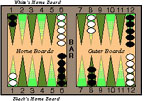 Fundamentals of Tournament Backgammon
By Butch Meese (2001).
An explanation of the rules of backgammon as they apply to tournament play, and a quick introduction to the strategy.
|
|
|
 Crane Rules
By Michael Crane (2000).
Michael Crane answers questions on the rules of backgammon and tournament play. Crane is an experienced tournament director. His answers are based on the rules of the British Isles Backgammon Association (BIBA).
|
|
|
 BIBA Backgammon Rules and Procedures
By Michael Crane (2013).
In 2012 I got in touch with Phil Simborg after I heard he was forming a set of rules that he hoped would be used internationally in most tournaments. I told him I would look at his efforts and adapt/adopt his new rules for Biba tournaments. Phil and colleagues Jeb Horton and Chuck Bower finally produced their new rules and I have decided to use selected sections for Biba.
|
|
|
Last updated: 17 Sep 2026
|